
Digital marketing is changing faster than ever. The strategies that worked a few years ago are no longer enough on their own. Search is becoming more conversational, artificial intelligence is becoming part of everyday marketing, social media is turning into a discovery and shopping channel, and customers increasingly expect businesses to communicate with them in a relevant and personalized way.
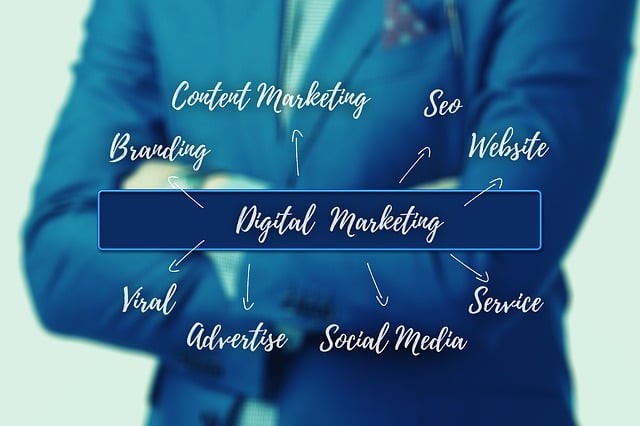
For businesses, this creates both a challenge and an opportunity.
You do not necessarily need a huge marketing budget to compete in 2026. But you do need to understand where customers are spending their attention and how technology is changing the way they discover, evaluate, and choose businesses.
According to HubSpot’s 2026 State of Marketing research, marketers are placing significant emphasis on AI-powered personalization, automation, adapting SEO to changing search behavior, and repurposing content across channels. Short-form video is also among the strongest-performing content formats.
Google’s 2026 research similarly highlights a major shift toward AI-powered, conversational, multimodal search, meaning customers can increasingly use text, images, voice, and longer natural-language questions to discover information and products.
So, what does this mean for your business?
Here are
1. AI Is Becoming a Core Part of Digital Marketing

Artificial intelligence is no longer just a futuristic technology discussed by large companies.
In 2026, AI is becoming part of everyday marketing workflows.
Businesses and marketing teams are using AI to help with:
- Content ideas
- Market research
- Customer segmentation
- Ad copy
- Email campaigns
- Social media content
- Image and video creation
- Data analysis
- Personalization
- Marketing automation
- Customer service
The important point, however, is that AI should not replace marketing strategy.
Instead, businesses should use AI to make their marketing teams more efficient.
AI + human expertise is the better combination
Imagine a digital marketing agency spending hours creating variations of social media captions.

AI can help generate those variations quickly.
But deciding:
Who is the target customer?
What problem are we solving?
What tone should the brand use?
What offer should be promoted?
What makes the business different?
Those are strategic decisions.
The businesses likely to benefit most from AI will not necessarily be those producing the most content. They will be the businesses using AI to produce better, more relevant, and more useful marketing.
HubSpot’s 2026 data identifies AI-generated personalized content and automation among the leading marketing trends.
What businesses should do
Start by identifying repetitive marketing tasks that can be assisted by AI.
For example:
Before:
Research → write → edit → publish → repeat
With AI assistance:
Research → AI-assisted draft → human review → brand refinement → publish → analyze
The human review remains important.
Your business needs a recognizable voice, accurate information, originality, and credibility.
2. SEO Is Evolving Into AI Search and Generative Search
SEO is not disappearing.
But it is changing.
For years, businesses focused heavily on ranking webpages for keywords in traditional search results.
Now customers are also using AI-powered search experiences to ask longer, more conversational questions.
Instead of searching:
“digital marketing agency”
A customer might search:
“What type of digital marketing strategy should a small local business use to generate more leads?”
That is a very different search experience.
Google describes the 2026 search environment as increasingly multimodal and conversational, with users able to express their needs through text, voice, images, and other forms of input.
This is where concepts such as Generative Engine Optimization (GEO) and Answer Engine Optimization (AEO) become increasingly relevant.
Traditional SEO asks:
How can I rank this webpage?
AI-oriented optimization asks:
How can I make my business a useful, credible source that search and AI systems can understand and reference?
That means businesses should focus on:
- Helpful content
- Clear explanations
- Original insights
- Strong topical relevance
- Authoritative information
- Well-structured webpages
- Frequently asked questions
- Clear business information
- Good technical SEO
- Consistent brand information
The goal is not simply to create content for algorithms.
The goal is to create content that actually answers customer questions.
Example
Suppose you run a web design company.
Instead of publishing 20 shallow articles containing the keyword “web design company,” create useful resources such as:
- How much does a business website cost?
- What pages does a small-business website need?
- How long does website development take?
- Website vs landing page: which does your business need?
- How does website speed affect conversions?
- How should a business choose a web design company?
This creates a stronger topical ecosystem around your expertise.
3. Short-Form Video Will Continue to Dominate Attention
People are spending enormous amounts of time consuming short videos.
For businesses, platforms such as:
- Instagram Reels
- YouTube Shorts
- TikTok
provide opportunities to reach potential customers without relying entirely on traditional advertising.
HubSpot’s 2026 marketing research identifies short-form video as one of the strongest-performing formats, with marketers reporting particularly strong ROI from it.
But there is an important misconception.
You do not need expensive production equipment to create effective short videos.
A simple business video can work
For example, a digital marketing company could create:
Video 1:
“3 reasons your website isn’t generating leads”
Video 2:
“SEO mistake small businesses make”
Video 3:
“Website vs Instagram: what should you focus on?”
Video 4:
“3 things to check before running Google Ads”
Each video can educate the viewer while subtly demonstrating the company’s expertise.
The first few seconds matter
A short video should quickly answer:
Why should I keep watching?
Instead of starting with:
“Hello everyone, today we’re going to talk about…”
Try:
“Your website might be losing customers without you realizing it.”
That creates curiosity.
The bigger opportunity
Short-form video is not only about entertainment.
It can be used for:
- Education
- Demonstrations
- Product explanations
- Customer testimonials
- Behind-the-scenes content
- Case studies
- FAQs
- Industry insights
- Brand storytelling
The key is consistency.
4. Social Media Is Becoming a Search Engine
Many businesses still think of social media as simply a place to publish posts.
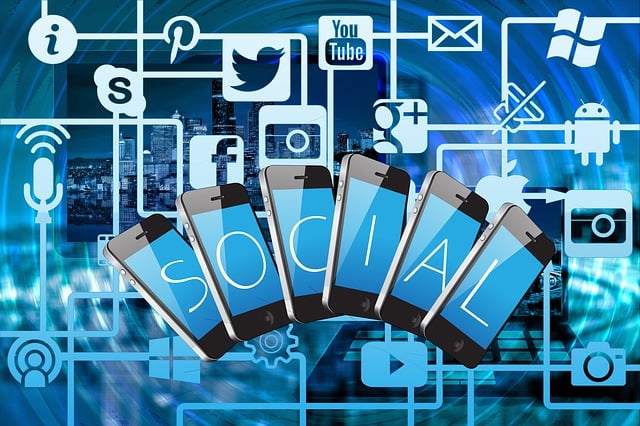
That view is outdated.
People increasingly use social platforms to discover:
- Restaurants
- Products
- Businesses
- Reviews
- Tutorials
- Creators
- Services
- Recommendations
HubSpot’s 2026 social media research describes a shift toward interest-based discovery and notes that social platforms increasingly combine discovery, search, shopping, and customer service.
This means your social media content should be discoverable, not simply attractive.
Think about social SEO
For example, instead of writing an Instagram caption like:
“We had an amazing day!”
A business could create content around a searchable topic:
“5 website design mistakes small businesses should avoid”
The second piece of content has a clearer information purpose.
Businesses should pay attention to:
- Keywords in captions
- On-screen text
- Video titles
- Spoken words
- Hashtags where relevant
- Profile descriptions
- Location information
- Frequently searched questions
Social media profiles are becoming business assets
Your Instagram, LinkedIn, YouTube, Facebook, or TikTok profile should clearly communicate:
Who you help
What you offer
Where you operate
Why customers should trust you
How customers can contact you
A potential customer may discover your business on social media before ever visiting Google.
5. Personalization Will Matter More
Customers don’t want to feel like they are receiving the same generic message as everyone else.
Personalization helps businesses make marketing more relevant.
Consider the difference between:
“Buy our services today.”
and:
“Running a small business and struggling to generate leads online? Here’s how our website and social media services can help.”
The second message speaks directly to a specific audience.
Personalization can happen at many levels
Businesses can personalize:
- Email campaigns
- Website experiences
- Advertising
- Offers
- Product recommendations
- Social media communication
- Landing pages
- Follow-up messages
AI is making personalization easier to implement at scale. HubSpot’s 2026 research identifies personalized content created with AI as a leading trend.
But don’t over-personalize
There is a difference between:
Relevant
and
Creepy.
Customers want businesses to understand their needs, but they also expect responsible use of their data.
The best personalization should feel useful rather than intrusive.
6. Authentic Content Will Become More Valuable
AI has made content creation faster.
That creates another problem:
There is now more generic content than ever.
When everyone can generate an article, image, caption, or video in seconds, simply producing more content is no longer a strong competitive advantage.
Businesses need something AI cannot easily manufacture:
A distinctive point of view.
For example, instead of writing:
“Digital marketing is important for businesses.”
A marketing company could share:
“We reviewed 20 small-business websites and found five common problems that make visitors leave before contacting the business.”
The second idea is more interesting because it contains experience, observation, and specificity.
Authenticity can come from:
- Customer stories
- Case studies
- Founder opinions
- Behind-the-scenes content
- Original research
- Industry observations
- Real examples
- Lessons learned
- Demonstrations
- Customer testimonials
HubSpot’s 2026 social media research reports that marketers increasingly see authentic content outperforming highly produced content.
This does not mean professional design is unimportant.
It means professional does not have to mean artificial.
7. Social Commerce and Conversational Commerce Are Growing
The journey from discovering a product to purchasing it is becoming shorter.
A customer might:
See a Reel → visit a profile → ask a question → click WhatsApp → receive information → make a purchase.
There may be no traditional journey of:
Google → website → contact form → email → sales call.
Social platforms and messaging services are increasingly becoming part of the transaction.
This is particularly important in India.
Meta’s 2026 research on Indian retail highlights the growing role of short-form video, creators, and WhatsApp in product discovery and commerce.
WhatsApp can become part of your marketing funnel
Businesses can use WhatsApp for:
- Customer enquiries
- Product questions
- Appointment requests
- Lead follow-up
- Offers
- Customer support
- Order updates
- Personalized communication
The key is not to turn WhatsApp into a spam channel.
Use it to make communication easier.
Example
Instead of:
“Fill out this long form and we’ll contact you.”
You might offer:
“Have questions about our service? Message us on WhatsApp.”
Reducing friction can make it easier for interested customers to take the next step.
8. Businesses Will Focus More on Marketing ROI

Getting likes is not the same as getting customers.
Getting website traffic is not automatically the same as generating revenue.
In 2026, businesses should become more serious about measuring marketing performance.
Important metrics include:
- Leads generated
- Cost per lead
- Conversion rate
- Customer acquisition cost
- Return on ad spend
- Website conversions
- Sales generated
- Customer lifetime value
- Organic traffic
- Qualified leads
Example
Imagine two campaigns.
Campaign A
10,000 views
500 clicks
20 leads
2 customers
Campaign B
4,000 views
200 clicks
15 leads
8 customers
Campaign A generated more traffic.
But Campaign B generated more customers.
This is why businesses should avoid judging marketing purely by impressions, likes, or followers.
The question should be:
“Did this marketing activity contribute to business growth?”
A good digital marketing strategy connects marketing metrics to actual business objectives.
9. Omnichannel Marketing Will Become More Important
Customers rarely interact with a business through only one channel.
Someone might discover your company through Instagram.
Then search for your website.
Then watch a YouTube video.
Then read reviews.
Then send a WhatsApp message.
Then finally purchase.
This is an omnichannel customer journey.
Google’s 2026 research describes consumers as moving fluidly between searching, streaming, scrolling, and shopping rather than following a simple linear funnel.
The problem with disconnected marketing
Imagine this situation:
Your Instagram says one thing.
Your website says something different.
Your advertisement promotes an offer that isn’t clearly explained on your website.
Your WhatsApp team gives customers different information.
This creates confusion.
Omnichannel marketing aims to create consistency
Your:
- Website
- Google presence
- Social media
- Ads
- Content
- Branding
should support the same overall business message.
Customers should recognize the same brand wherever they encounter it.
10. First-Party Data and Customer Relationships Will Become More Important
Businesses should not rely entirely on social media platforms or advertising platforms to reach customers.
Algorithms change.
Advertising costs change.
Platforms change.
Your business needs assets that you can build and maintain over time.
Examples include:
- Email subscribers
- Customer databases
- Website traffic
- CRM records
- Customer relationships
- Original content
- Brand communities
- Direct communication channels
Why this matters
Imagine a business has 100,000 followers but no customer database.
Another business has 20,000 followers plus a strong email list, CRM system, website traffic, and repeat customers.
The second business may have a stronger long-term marketing asset.
The goal isn’t to abandon social media.
The goal is to use social media to build relationships that can continue beyond a single platform.
How Businesses Can Adapt to These 10 Trends
You don’t need to implement everything at once.
Trying to follow every new trend can actually make your marketing worse.
Instead, build your strategy around your customers.
Step 1: Understand your audience
Identify:
- Who are your customers?
- What problems do they have?
- What questions do they ask?
- Where do they spend time online?
- How do they research before buying?
Step 2: Improve your website
Your website should clearly communicate:
- What you offer
- Who you help
- Why you’re different
- What customers should do next
Step 3: Build useful content
Create content that answers real customer questions.
Use:
- Blog articles
- Videos
- FAQs
- Guides
- Case studies
- Social posts
Step 4: Add AI strategically
Use AI to improve efficiency.
Don’t use it simply to produce huge amounts of generic content.
Step 5: Invest in short-form video
Create educational and useful videos consistently.
Repurpose your strongest ideas across:
- YouTube
- Other relevant platforms
Step 6: Make your business discoverable
Optimize your website and social profiles for the questions your customers are asking.
Think beyond traditional keywords.
Think about topics, questions, intent, and context.
Step 7: Measure results
Track the numbers that matter to your business.
Don’t optimize for vanity metrics.
Optimize for:
Leads → Customers → Revenue → Growth
A Simple 2026 Digital Marketing Framework
Businesses can simplify all these trends into five major areas:
1. GET FOUND
Use:
- SEO
- AI Search optimization
- Social search
- Local search
- Helpful content
2. GET ATTENTION
Use:
- Short-form video
- Social media
- Creators
- Visual content
- Strong branding
3. BUILD TRUST
Use:
- Reviews
- Testimonials
- Case studies
- Educational content
- Authentic communication
- Consistent branding
4. CONVERT
Use:
- Landing pages
- Clear CTAs
- Lead forms
- Offers
- Retargeting
5. RETAIN
Use:
- Customer support
- Communities
- Personalized communication
- Repeat marketing
This creates a complete marketing system rather than a collection of disconnected tactics.
Final Thoughts
Digital marketing in 2026 is not simply about being present on more platforms.
It is about being useful, discoverable, relevant, authentic, and measurable.
AI is changing how marketing is produced.
AI-powered search is changing how customers discover information.
Short-form video is changing how businesses capture attention.
Social media is becoming increasingly connected to search and commerce.
WhatsApp and other conversational channels are reducing the distance between businesses and customers.
And analytics is pushing businesses to focus more heavily on measurable business outcomes.
But one principle remains unchanged:
Customers still want businesses that understand their problems and provide useful solutions.
Technology can help you reach those customers faster.
Strategy determines whether you actually connect with them.
For businesses in 2026, the winning approach isn’t necessarily to follow every trend.
It is to identify the trends that matter to your customers, use technology intelligently, create genuinely useful content, and build a digital presence that turns attention into trust and trust into business.
Ready to Build Your 2026 Digital Marketing Strategy?
At WebMart, we help businesses build a stronger digital presence through services such as website design, graphic design, social media marketing, and digital marketing strategy.
Whether you’re launching a new business or trying to improve your existing online presence, the right strategy can help you become easier to find, easier to trust, and easier to choose.
WebMart — helping businesses grow in the digital world.